Have you ever finished a workout feeling uncomfortable because your clothes were soaked with sweat?
Many people focus on the style, color, or fit of activewear but overlook one of the most important factors that affects comfort and performance: moisture wicking technology.
Whether you’re running outdoors, training in the gym, practicing yoga, or simply staying active throughout the day, the right fabric can make a noticeable difference. Moisture wicking technology is designed to help move sweat away from your skin, allowing it to evaporate faster and keeping you feeling drier and more comfortable.
This guide explains how moisture wicking technology works, why it matters, and what to look for when choosing moisture-wicking activewear.
Why Sweat Management Matters During Exercise
Sweating is a natural process that helps regulate body temperature. It is your body’s cooling system.
The challenge begins when sweat becomes trapped between your skin and clothing.
When workout clothes absorb and hold moisture for long periods, several issues can occur:
- Clothing feels heavy and uncomfortable
- Fabric sticks to the skin
- Chafing and irritation become more common
- Body temperature becomes harder to regulate
- Overall workout comfort decreases
The goal is not to prevent sweating. The goal is to manage sweat effectively so you can stay focused on your activity instead of your clothing.
This is where moisture wicking technology becomes important.
What Is Moisture Wicking Technology?
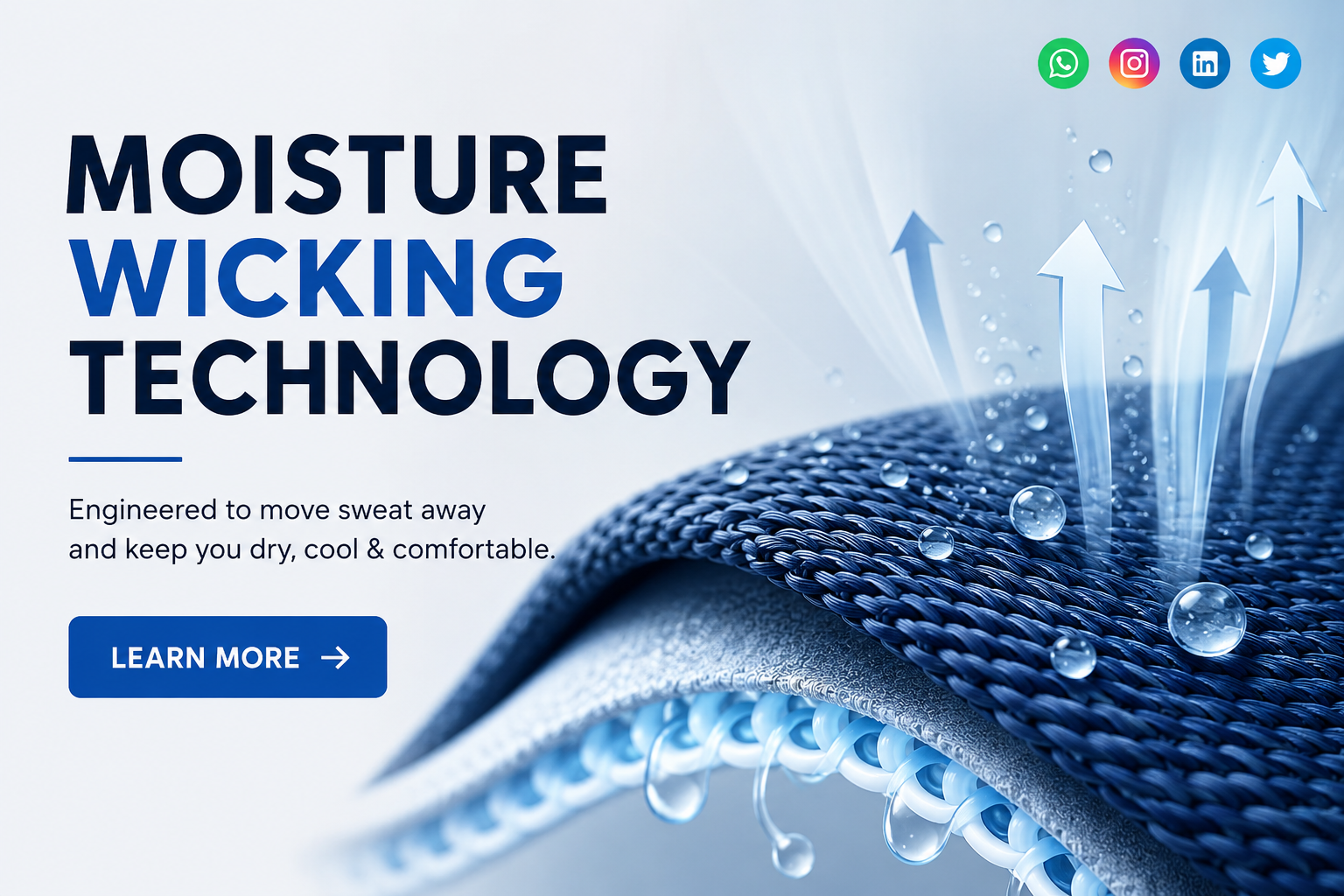
Moisture wicking technology refers to a fabric’s ability to pull moisture away from the skin and move it toward the outer surface of the garment, where it can evaporate more quickly.
Unlike traditional fabrics that absorb and retain sweat, moisture-wicking fabrics are engineered to transport moisture away from the body.
As a result, the wearer experiences:
- Improved comfort
- Better breathability
- Faster drying
- Reduced clinginess
- Enhanced performance during physical activities
Modern activewear uses specially designed fibers and fabric structures to achieve this effect.
How Does Moisture Wicking Fabric Work?
The process may seem advanced, but the concept is simple.
Step 1: Sweat Forms on the Skin
During physical activity, your body produces sweat to cool itself.
Step 2: Fabric Pulls Moisture Away
Moisture-wicking fibers draw sweat away from the skin’s surface.
Step 3: Moisture Spreads Across the Fabric
Instead of remaining concentrated in one area, the moisture spreads across a larger surface.
Step 4: Evaporation Happens Faster
The increased surface area allows moisture to evaporate more quickly.
Step 5: You Stay Drier and More Comfortable
Because sweat leaves the fabric faster, you experience less discomfort and better airflow throughout your workout.
The result is a cooler, lighter, and more comfortable activewear experience.
The Science Behind Moisture Wicking Technology
The effectiveness of moisture-wicking fabrics is based on a principle known as capillary action.
Capillary action allows moisture to move through tiny spaces within fabric fibers without requiring external force.
Manufacturers engineer performance fabrics with specialized fiber structures that:
- Attract moisture from the skin
- Distribute it across the fabric surface
- Accelerate evaporation
This combination creates a more efficient moisture management system than traditional fabrics.
While the science is complex, the benefit is simple: better comfort during movement.
Key Benefits of Moisture Wicking Activewear
Stay Drier During Workouts
Moisture-wicking fabrics help reduce the feeling of wet, sticky clothing by moving sweat away from the body.
Improved Comfort
Dryer clothing creates a more comfortable experience during exercise, sports, and daily activities.
Better Temperature Regulation
When sweat evaporates efficiently, your body can cool itself more effectively.
Reduced Chafing
Less trapped moisture means less friction between fabric and skin.
Lightweight Feel
Unlike heavily soaked cotton garments, moisture-wicking activewear remains relatively lightweight during exercise.
Faster Drying
Performance fabrics dry significantly faster than many traditional materials, making them ideal for active lifestyles.
Moisture Wicking vs Cotton: Which Is Better?
Cotton has long been appreciated for its softness and comfort. However, when it comes to intense physical activity, moisture-wicking fabrics generally perform better.
| Feature | Moisture Wicking Fabric | Cotton |
| Sweat Management | Excellent | Limited |
| Drying Speed | Fast | Slow |
| Comfort During Exercise | High | Moderate |
| Weight When Wet | Light | Heavy |
| Breathability | High | Moderate |
| Performance Training | Ideal | Less Suitable |
Cotton absorbs sweat and holds moisture, while moisture-wicking fabrics actively move moisture away from the skin.
For everyday casual wear, cotton remains a popular choice. For workouts, running, training sessions, and outdoor activities, moisture-wicking activewear often delivers a more comfortable experience.
Best Fabrics Used in Moisture Wicking Activewear
Not all fabrics perform the same way.
Polyester
Polyester is one of the most widely used moisture-wicking materials in activewear.
Benefits include:
- Quick drying
- Lightweight feel
- Excellent durability
- Strong moisture management
Nylon
Nylon offers excellent strength and flexibility.
Benefits include:
- Smooth texture
- High durability
- Good moisture transport
- Enhanced comfort
Polyester-Spandex Blends
These blends combine moisture management with stretch and flexibility.
Benefits include:
- Improved mobility
- Better fit
- Comfortable movement
- Excellent workout performance
Technical Performance Fabrics
Premium activewear brands often use advanced fabric technologies specifically designed for athletic performance and moisture control.
How to Identify Genuine Moisture Wicking Clothing
Not every garment marketed as activewear offers effective moisture management.
Before purchasing activewear, consider the following factors.
Check the Fabric Composition
Look for performance-focused materials such as polyester, nylon, and technical fabric blends.
Review Product Features
Terms such as:
- Moisture wicking
- Quick dry
- Sweat management
- Performance fabric
- Breathable technology
often indicate specialized fabric construction.
Consider Your Activity
Different activities have different requirements.
For example:
- Running apparel requires strong moisture control.
- Gym wear needs flexibility and breathability.
- Yoga clothing benefits from comfort and stretch.
Evaluate Fabric Feel
Quality moisture-wicking garments often feel lightweight and designed for movement.
Who Benefits Most From Moisture Wicking Apparel?
Gym Enthusiasts
Weight training and high-intensity workouts generate significant sweat, making moisture management essential.
Runners
Running often exposes athletes to heat, humidity, and long-duration activity.
Athletes
Competitive sports demand consistent comfort and performance.
Yoga Practitioners
Flexible, breathable fabrics support unrestricted movement.
Outdoor Fitness Enthusiasts
People exercising outdoors benefit from better temperature control and quicker drying.
Individuals Living in Warm Climates
Moisture-wicking clothing can provide improved comfort during daily activities in hot and humid environments.
Common Myths About Moisture Wicking Technology
Myth 1: Moisture Wicking Means Waterproof
Moisture-wicking fabrics manage sweat. They are not designed to block water completely.
Myth 2: All Polyester Fabrics Are Moisture Wicking
Not all polyester fabrics use moisture-management technology. Fabric construction matters.
Myth 3: Moisture Wicking Prevents Sweating
No fabric can stop your body from sweating naturally.
Moisture-wicking technology simply helps manage sweat more effectively.
Myth 4: Only Athletes Need Moisture Wicking Clothing
Anyone who values comfort in warm conditions can benefit from moisture-wicking apparel.
How to Care for Moisture Wicking Activewear
Proper care helps maintain fabric performance.
Follow these tips:
- Wash with cold water
- Use mild detergent
- Avoid fabric softeners
- Avoid excessive heat during drying
- Follow garment care instructions
These simple steps can help preserve moisture-wicking performance over time.
Choosing the Right Moisture Wicking Activewear
When selecting activewear, focus on more than appearance.
Consider:
- Fabric quality
- Moisture management capability
- Breathability
- Stretch and flexibility
- Intended activity
- Overall comfort
The best activewear combines performance, comfort, durability, and functionality.
Investing in quality moisture-wicking apparel can improve your workout experience and help you stay comfortable throughout the day.
Frequently Asked Questions
What does moisture wicking mean?
Moisture wicking refers to a fabric’s ability to move sweat away from the skin and promote faster evaporation.
Does moisture wicking technology really work?
Yes. Properly engineered moisture-wicking fabrics help manage sweat and improve comfort during physical activity.
Is moisture wicking better than cotton?
For workouts and sports activities, moisture-wicking fabrics generally provide better sweat management and faster drying than cotton.
Which fabric is best for moisture wicking?
Polyester, nylon, and performance fabric blends are among the most effective moisture-wicking materials.
Is moisture wicking clothing good for summer?
Yes. Moisture-wicking apparel helps improve airflow, comfort, and sweat management in warm weather.
Can moisture-wicking fabrics reduce discomfort during workouts?
By keeping clothing drier and reducing friction, moisture-wicking fabrics can help improve comfort during exercise.
How long does moisture wicking technology last?
With proper care, quality moisture-wicking garments can maintain their performance for an extended period.
Is moisture-wicking activewear suitable for daily wear?
Absolutely. Many people wear moisture-wicking apparel for travel, walking, casual activities, and everyday comfort.
Final Thoughts
Moisture wicking technology has transformed modern activewear by helping athletes, fitness enthusiasts, and everyday users stay more comfortable during movement.
Rather than allowing sweat to remain trapped against the skin, moisture-wicking fabrics work to move moisture outward, support faster evaporation, and improve overall comfort.
Whether you are choosing gym wear, running apparel, training clothing, or everyday activewear, understanding moisture-wicking technology can help you make more informed purchasing decisions and enjoy a better experience every time you move.